Mihaana | Ayurvedic Natural Care Oils – Baby, Mom, Body, Hair & Beard

Author name: mihaana

Blog

Ayurveda Meets Modern Science: A Global Shift Toward Natural, Knowledge-Driven Wellness

For thousands of years, Ayurveda — literally “the science of life” — has guided how millions live, eat, heal and age. What was once seen as folk tradition is now entering laboratories, hospitals, wellness apps and global policy rooms. Around the world, people are no longer choosing between ancient wisdom and modern medicine; they are learning to combine them. This article explores how Ayurveda is being adopted alongside modern science, how it is becoming a knowledge service rather than a closed tradition, why Japan stands out as a model of natural and traditional culture, and what positive changes this shift can bring to your life. The Rise of Ayurveda as a Global Knowledge Service From Oral Tradition to Open Knowledge Ayurveda was historically passed down through families, gurukuls and handwritten manuscripts. Today, that knowledge is being digitized, structured and shared at scale. Classical texts are being translated and placed online, research foundations are building open-access databases, and peer-reviewed journals now publish Ayurvedic case reports and clinical studies. This transformation matters. When knowledge is documented and made searchable, it stops being a mystery and becomes a service — something a doctor in Berlin, a yoga teacher in California or a new mother in Tokyo can actually use. Knowledge Services Powering the Wellness Economy The modern wellness movement runs on information. People want to understand what they put on their skin and into their bodies. Ayurvedic knowledge services — blogs, courses, consultations, dosha quizzes, ingredient explainers — answer that demand. When tradition becomes teachable, it becomes trustworthy. Brands today don’t just sell oils and herbs; they educate. A consumer learning why a dry scalp needs a different oil than an oily scalp, or how a newborn massage supports sleep and circulation, is far more likely to adopt these practices for life. How the World Is Blending Ayurveda With Modern Science Integrative Medicine Goes Mainstream The most important global trend is integration — using traditional and modern systems together rather than treating them as rivals. The World Health Organization has actively supported this direction, establishing a Global Centre for Traditional Medicine in India and hosting its first Traditional Medicine Global Summit alongside a G20 health meeting. The WHO has noted that the vast majority of its member states already use some form of traditional medicine and want better evidence to guide its safe, equitable use. Research Is Catching Up Scientific institutions are increasingly studying the biochemistry behind Ayurvedic theories — examining herbs, formulations and lifestyle practices through clinical trials and laboratory analysis. It’s worth being honest here: the evidence base is still maturing. Some Ayurvedic practices have promising scientific support, while others await rigorous testing. The healthiest global attitude is neither blind faith nor blanket dismissal — it is curiosity backed by evidence. That balanced mindset is exactly what’s driving credible adoption. Why People Are Choosing This Path Across continents, the motivations look similar: Japan: A Living Model of Traditional and Natural Culture If you want to see how a modern, high-tech nation can honor traditional and natural medicine, look at Japan. Kampo: Traditional Medicine Inside a Modern Health System Japan practices Kampo (漢方) — a traditional herbal medicine system adapted from Chinese medicine and refined over centuries to suit Japanese needs. What makes Japan remarkable is that Kampo isn’t fringe; it is woven into the national healthcare system. Standardized and Trusted Around 148 Kampo formulations are approved for reimbursement under Japan’s National Health Insurance, and the Japanese Pharmacopoeia lists scores of approved herbal ingredients. These medicines are produced under strict, pharmaceutical-grade manufacturing standards — meaning a herbal remedy carries the same quality assurance as a conventional drug. Doctors Actually Prescribe It This is not symbolic. A nationwide study found that a large majority of registered Japanese physicians prescribe Kampo medicines. In Japan, a patient might receive a modern diagnostic test and a traditional herbal formula in the very same clinic — integration in its truest sense. A Culture That Lives Naturally Japan’s affinity for natural wellness goes far beyond medicine. Consider: Japan demonstrates a powerful truth: embracing tradition does not mean rejecting science. It means letting both raise the standard of life. Why You Should Adopt Ayurvedic and Natural Living It Treats You as a Whole Person Modern medicine excels at fixing acute problems. Ayurveda excels at daily balance — sleep, digestion, stress, skin and energy. Together they cover both the emergency and the everyday. It Builds Habits, Not Just Cures An Ayurvedic routine (dinacharya) — oiling the hair, massaging the body, eating mindfully, sleeping on rhythm — turns wellness into a daily practice rather than an occasional rescue. These small rituals compound into lasting health. It Respects Your Skin and Your Planet Choosing natural, herb-based personal care means fewer synthetic additives on your body and a lighter footprint on the earth. For many families, that peace of mind is reason enough. The Positive Changes This Shift Brings For Individuals For Communities and Culture For the Future of Medicine The biggest change is philosophical. The world is moving from “traditional or modern” to “traditional and modern.” This integrative future promises healthcare that is preventive, personalized, evidence-aware and humane — drawing on the best of five-thousand-year-old wisdom and cutting-edge research at once. Final Thoughts Ayurveda’s global moment is not about nostalgia. It is about relevance. As knowledge services make ancient wisdom accessible, as modern science tests and validates what works, and as cultures like Japan prove that tradition and technology can thrive together, more people are discovering a calmer, cleaner, more balanced way to live. You don’t have to abandon modern medicine to embrace natural wellness — you simply have to open the door to both. Start small: a mindful routine, a natural oil, a more intentional meal. The science of life, after all, was always meant to be lived. #Ayurveda#NaturalWellness #HolisticHealth #Kampo #JapaneseWellness #ShinrinYoku #ForestBathing #EasternMedicine #GlobalWellness #TraditionMeetsScience #Longevity #AyurvedaEveryday #NaturalLiving #HerbalRemedies #HealthyHabits


Patchy Beard Solutions
Blog

Patchy Beard Solutions: What Ayurveda Says

Introduction A thick and healthy beard is often associated with confidence and style. However, many men struggle with patchy beard growth, uneven density, or slow beard development. Patchy beards can result from genetics, poor grooming habits, stress, hormonal imbalance, or unhealthy lifestyle choices. Ayurveda approaches beard care holistically by improving nourishment, circulation, and overall wellness. Instead of relying only on quick fixes, Ayurvedic beard care focuses on strengthening hair follicles naturally. This guide explores the causes of patchy beard growth and the best Ayurvedic solutions for healthier beard development. What Causes a Patchy Beard? Patchy beard growth occurs when facial hair grows unevenly in certain areas. Common Causes ·      Genetics ·       Hormonal imbalance ·       Poor blood circulation ·       Nutritional deficiency ·       Stress ·       Lack of beard care ·       Skin conditions ·       Poor sleep quality  Understanding the root cause is essential before choosing a treatment approach. Ayurveda and Beard Growth Ayurveda believes healthy hair growth depends on balanced doshas, proper nutrition, and healthy circulation. Dosha Imbalances Linked to Beard Issues Vata Imbalance Can cause dryness and weak hair growth. Pitta Imbalance May trigger inflammation and hair thinning. Kapha Imbalance Can lead to clogged follicles and excessive oiliness. Ayurvedic beard care aims to nourish roots naturally and support balanced growth. Best Ayurvedic Oils for Patchy Beard Growth Castor Oil Popular for improving beard thickness. Coconut Oil Keeps beard soft and moisturized. Bhringraj Oil Traditionally used for hair nourishment. Amla Oil Supports stronger hair roots. Almond Oil Rich in vitamin E for healthy beard texture. Beard Oil Blends Herbal blends with Ayurvedic ingredients can support beard conditioning naturally. How to Apply Beard Oil Correctly Step 1 Wash your beard with mild cleanser. Step 2 Pat dry with towel. Step 3 Take a few drops of beard oil. Step 4 Massage into skin beneath the beard. Step 5 Comb evenly through beard hair. Massage improves circulation and helps oil reach follicles effectively. Importance of Beard Massage Facial massage may stimulate blood flow and improve nourishment. Benefits ·       Supports circulation ·       Relaxes facial muscles ·       Improves absorption of oils ·       Helps maintain healthier follicles Use gentle circular motions daily. Nutrition for Healthy Beard Growth Your diet directly impacts hair quality. Important Nutrients Protein Hair is made primarily of protein. Biotin Supports hair strength. Zinc Important for follicle function. Iron Helps oxygen delivery. Omega-3 Fatty Acids Support skin and hair nourishment. Foods That Support Beard Health ·       Nuts and seeds ·       Green vegetables ·       Fruits ·       Lentils ·       Dairy products ·       Eggs ·       Healthy oils Hydration is equally important. Lifestyle Habits That Affect Beard Growth Stress Stress may weaken hair growth cycles. Poor Sleep Lack of sleep impacts hormone balance. Smoking Can reduce circulation. Excess Alcohol May affect nutrient absorption. Poor Hygiene Dirty skin may clog follicles. Healthy habits support healthier beard growth naturally. Ayurvedic Herbs Used in Beard Care Ashwagandha Traditionally used for stress support. Brahmi Known for calming properties. Bhringraj Popular in Ayurvedic hair care. Neem Supports skin cleanliness. Amla Rich in antioxidants. These herbs are often included in herbal beard oils. Common Beard Grooming Mistakes Overwashing Removes natural oils. Using Harsh Products Chemicals may irritate skin. Not Moisturizing Dry skin weakens beard appearance. Excess Trimming Improper trimming affects shape. Ignoring Diet Poor nutrition affects hair quality. Can Beard Rollers Help? Some men use beard rollers to stimulate the skin. While results vary, combining healthy lifestyle habits with Ayurvedic care is generally more sustainable than depending only on tools. Always avoid aggressive treatments that may damage skin. How Long Does Beard Growth Take? Beard growth speed varies for every person. Factors include: ·       Genetics ·       Age ·       Hormones ·       Diet ·       Stress levels ·       Grooming habits Consistency is important. Natural beard care usually requires patience. Ayurvedic Beard Care Routine Morning ·       Clean beard gently ·       Apply light beard oil ·       Comb beard Evening ·       Massage beard oil ·       Maintain hydration ·       Sleep properly Simple daily routines create long-term improvements. Skin Care Beneath the Beard Healthy beard growth starts with healthy skin. Beard Skin Care Tips ·       Exfoliate gently ·       Keep pores clean ·       Avoid excessive scratching ·       Use natural moisturizers ·       Drink enough water Neglecting skin care may worsen patchiness. Myths About Patchy Beards Myth: Shaving Makes Beard Thicker Shaving does not change follicle density. Myth: Beard Oil Creates Instant Growth Beard oils support conditioning and scalp health but require consistent use. Myth: Everyone Can Grow a Thick Beard Quickly Genetics plays a major role. Benefits of Ayurvedic Beard Oils ·       Improves beard softness ·       Supports healthier roots ·       Reduces dryness ·       Helps manage rough texture ·       Nourishes facial skin ·       Enhances beard appearance naturally Frequently Asked Questions Can Ayurveda fix patchy beard naturally? Ayurvedic care may support healthier beard growth through nourishment and healthy routines. Which oil is best for beard growth? Castor oil, Bhringraj oil, and herbal beard oils are commonly used. How often should beard oil be applied? Usually once or twice daily in small quantity. Does stress affect beard growth? Yes, stress may negatively impact hair growth. Conclusion Patchy beard growth is common, but proper care can improve beard appearance and overall beard health naturally. Ayurveda focuses on nourishment, circulation, healthy lifestyle habits, and herbal oils to support better beard growth. Consistent grooming, balanced

Blog

Newborn Baby Massage: Step-by-Step Ayurvedic Guide

Newborn baby massage has been a trusted Ayurvedic tradition in Indian households for generations. From improving sleep to strengthening muscles and promoting healthy skin, gentle baby massage creates a beautiful bond between parent and child. Ayurveda considers touch therapy an essential part of infant wellness because it supports physical development, emotional security, and overall growth. Modern parents are now rediscovering the value of Ayurvedic baby massage because natural care routines are safer and more nurturing for delicate newborn skin. A proper massage routine using herbal oils can calm babies, improve circulation, and help digestion naturally. This step-by-step Ayurvedic guide explains everything parents need to know about newborn baby massage, including the best timing, techniques, precautions, and oils. Why Baby Massage Is Important in Ayurveda Ayurveda believes that gentle oil massage, also known as Abhyanga, balances the body and nourishes tissues from the inside out. For newborns, massage is especially beneficial because babies are still adapting to the outside environment after birth. Main Benefits of Newborn Baby Massage ·       Improves blood circulation ·       Supports healthy weight gain ·       Promotes better sleep ·       Strengthens muscles and bones ·       Helps digestion and reduces gas ·       Keeps baby skin soft and moisturized ·       Improves parent-baby bonding ·       Supports relaxation and emotional comfort Ayurvedic oils are rich in natural herbs and nutrients that penetrate gently into the skin. Unlike chemical-based products, herbal oils are safer for delicate newborn skin. Best Time for Baby Massage Timing plays an important role in baby massage. Ideal Time ·       Morning after the baby wakes up ·       Before bath time ·       At least 30 minutes after feeding Avoid Massage When ·       Baby has fever ·       Baby is crying excessively ·       Right after feeding ·       Baby has skin infections or rashes ·       Baby feels uncomfortable Consistency matters more than duration. Even a 10 to 15-minute gentle massage daily can provide excellent benefits. Choosing the Right Ayurvedic Baby Massage Oil Not every oil is suitable for newborn babies. Choose oils that are mild, chemical-free, and specially designed for infant skin. Best Ayurvedic Oils for Babies Coconut Oil Ideal for summer because it cools and hydrates the skin. Sesame Oil Traditionally used in Ayurveda for improving strength and circulation. Almond Oil Rich in vitamin E and helpful for soft skin. Herbal Baby Massage Oils Ayurvedic blends with herbs like Bala, Ashwagandha, and Calendula help nourish baby skin naturally. What to Avoid ·       Artificial fragrances ·       Mineral oils ·       Harsh preservatives ·       Strong essential oils ·       Alcohol-based products Always perform a patch test before using a new oil. Preparing for Baby Massage Before starting massage, create a calm and comfortable environment. Things You Need ·       Soft towel ·       Warm room ·       Mild Ayurvedic oil ·       Comfortable mat or bed ·       Clean hands Preparation Tips ·       Trim your nails ·       Warm the oil slightly ·       Wash hands properly ·       Maintain gentle room temperature ·       Stay relaxed and calm Babies easily sense emotions, so a peaceful atmosphere makes the experience more comforting. Step-by-Step Ayurvedic Baby Massage Guide Step 1: Start with the Legs Begin from the baby’s thighs and gently move downward toward the feet. Use slow circular movements and light pressure. Benefits: ·       Improves circulation ·       Relaxes muscles ·       Helps flexibility Step 2: Massage the Feet Use your thumbs to gently press the soles. Move in circular motions around the heels and toes. Benefits: ·       Calms the nervous system ·       Encourages relaxation ·       Supports sleep quality Step 3: Massage the Arms Hold the baby’s arm gently and massage from shoulders to wrists. Use soft strokes without applying pressure. Step 4: Chest Massage Place both hands on the center of the chest and move outward slowly. This movement helps breathing and relaxation. Step 5: Tummy Massage Massage the tummy clockwise using light circular movements. Benefits: ·       Helps digestion ·       Reduces gas and bloating ·       Supports bowel movement Never press too hard on the stomach. Step 6: Back Massage Turn the baby gently onto the tummy. Massage from neck to legs using downward strokes. Benefits: ·       Strengthens back muscles ·       Improves posture support ·       Relaxes the body Step 7: Head Massage Use fingertips very gently on the scalp. Avoid pressure on the soft spot. Benefits: ·       Promotes calmness ·       Nourishes scalp ·       Improves sleep Step 8: Face Massage Use extremely gentle strokes around cheeks and forehead. Avoid oil near the eyes and mouth. How Long Should Baby Massage Last? For newborns, 10 to 15 minutes is enough. As babies grow older, massage duration can increase gradually to 20 to 30 minutes. Watch the baby’s reactions carefully. If the baby becomes irritated or uncomfortable, stop the massage. Common Mistakes Parents Should Avoid Applying Too Much Pressure Newborn skin and muscles are delicate. Using Cold Oil Always warm the oil slightly. Massaging Right After Feeding This may cause discomfort or vomiting. Overusing Essential Oils Strong fragrances can irritate babies. Ignoring Baby’s Mood Massage should feel relaxing, not forced. Seasonal Baby Massage Tips Summer Use cooling oils like coconut oil. Massage during cooler parts of the day. Winter Use warming oils like sesame oil. Keep the room warm. Monsoon Ensure the baby remains dry after massage. Avoid damp environments. Ayurvedic Herbs

dry scalp vs oily scalp
Blog

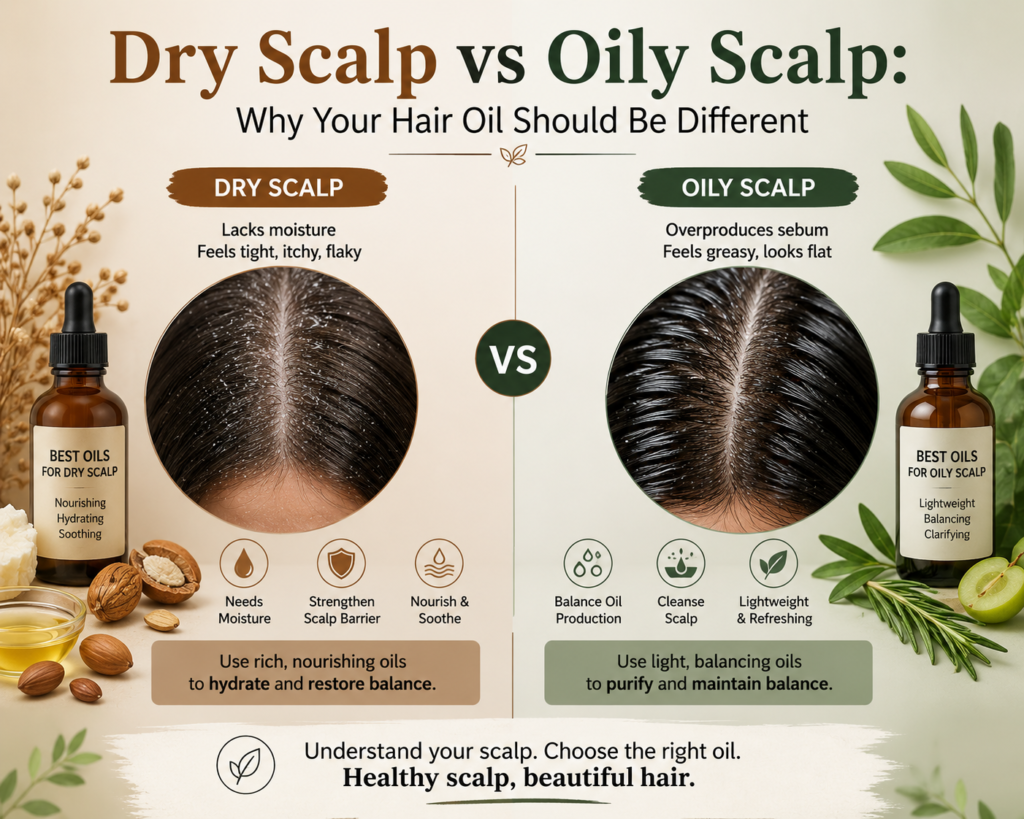
Dry Scalp vs Oily Scalp: Why Your Hair Oil Should Be Different

Introduction Hair problems often begin at the scalp. Many people use the same hair oil regardless of their scalp condition, but dry scalp and oily scalp require completely different care routines. Using the wrong oil may worsen dandruff, itching, hair fall, or greasiness. Ayurveda emphasizes personalized hair care based on body balance and scalp condition. Understanding your scalp type is the first step toward healthier hair growth. This guide explains the major differences between dry scalp and oily scalp, their causes, symptoms, and how Ayurvedic hair oils can help restore balance naturally. Understanding Scalp Health Your scalp produces natural oils called sebum. Balanced sebum keeps hair moisturized and protected. However, excessive oil or insufficient oil production creates scalp issues. Healthy Scalp Signs ·       Comfortable skin ·       Minimal itching ·       Balanced moisture ·       Strong hair roots ·       Limited flaking Scalp imbalance can lead to hair damage over time. What Is Dry Scalp? Dry scalp occurs when the skin lacks sufficient moisture and natural oils. Common Symptoms ·       Itching ·       Tightness ·       White dry flakes ·       Rough skin texture ·       Dull hair ·       Hair breakage Dry scalp is common during winter or in people exposed to harsh shampoos and pollution. Causes of Dry Scalp Excessive Shampoo Use Frequent washing removes natural oils. Harsh Hair Products Chemical treatments damage scalp moisture. Weather Conditions Cold weather often dries the scalp. Dehydration Low water intake affects skin hydration. Nutritional Deficiency Lack of vitamins and healthy fats impacts scalp health. Stress Stress can worsen scalp dryness and irritation. What Is Oily Scalp? An oily scalp produces excess sebum. Common Symptoms ·       Sticky scalp ·       Greasy hair within hours ·       Acne near hairline ·       Heavy dandruff ·       Flat-looking hair ·       Bad scalp odor Excess oil attracts dirt and buildup, which can clog follicles. Causes of Oily Scalp Hormonal Changes Hormones strongly influence oil production. Overwashing Hair Frequent washing may trigger more oil production. Humid Climate Hot weather increases scalp oiliness. Poor Diet Excess junk food and sugar may affect scalp condition. Product Buildup Heavy styling products clog the scalp. Dry Scalp vs Oily Scalp: Key Differences Feature Dry Scalp Oily Scalp Texture Rough Greasy Flakes Small and dry Larger and sticky Hair Appearance Frizzy Flat and oily Itching Common Common Sebum Production Low High Hair Fall Due to weakness Due to clogged follicles Knowing these differences helps choose proper hair care products. Why Your Hair Oil Should Be Different One oil cannot solve every scalp issue. Ayurveda focuses on balancing scalp conditions rather than simply applying oil. For Dry Scalp Heavy nourishing oils work better. For Oily Scalp Lightweight balancing oils are more suitable. Using incorrect oil may worsen the problem. Best Ayurvedic Oils for Dry Scalp Coconut Oil Deeply moisturizes the scalp. Almond Oil Rich in vitamin E and healthy fats. Bhringraj Oil Supports scalp nourishment and hair strength. Sesame Oil Provides warmth and hydration. Amla Oil Helps maintain healthy roots. Best Ayurvedic Oils for Oily Scalp Neem Oil Supports scalp cleanliness. Tea Tree Infused Oils Helps control excess buildup. Brahmi Oil Calms scalp irritation. Lightweight Herbal Blends Reduce heaviness while nourishing roots. Avoid thick oil layering on oily scalp. How to Apply Hair Oil Correctly For Dry Scalp ·       Warm the oil slightly ·       Massage gently for 10 minutes ·       Leave overnight if comfortable ·       Wash with mild shampoo For Oily Scalp ·       Use small quantity ·       Focus on scalp lightly ·       Leave for shorter duration ·       Avoid over-oiling Consistency matters more than excessive application. Ayurvedic Perspective on Scalp Types Ayurveda connects scalp conditions with doshas. Vata Imbalance Associated with dryness. Pitta Imbalance Linked to sensitivity and inflammation. Kapha Imbalance Connected to excess oiliness. Balancing doshas through diet, routine, and oils may improve scalp health naturally. Natural Remedies for Dry Scalp Hydration Drink enough water daily. Gentle Shampoo Avoid sulfates and harsh cleansers. Healthy Fats Include nuts and seeds in the diet. Scalp Massage Improves circulation and nourishment. Avoid Hot Water Hot water strips moisture. Natural Remedies for Oily Scalp Wash Regularly Maintain scalp hygiene. Avoid Heavy Creams Reduce product buildup. Balanced Diet Limit oily junk foods. Herbal Hair Masks Use natural scalp-cleansing ingredients. Stress Management Stress may increase oil production. Common Hair Problems Linked to Scalp Imbalance Hair Fall Weak roots or clogged follicles. Dandruff Dry flakes or oily buildup. Slow Hair Growth Poor scalp health affects follicles. Itching Caused by irritation and imbalance. Breakage Dryness weakens strands. Healthy hair begins with a healthy scalp. Lifestyle Habits That Affect Your Scalp Sleep Poor sleep impacts hormones. Diet Nutrition affects scalp oil production. Pollution Environmental toxins damage the scalp. Heat Styling Excess heat weakens hair roots. Stress Emotional stress affects overall scalp health. How Often Should You Oil Your Hair? Dry Scalp 2 to 3 times weekly. Oily Scalp 1 to 2 times weekly using light oil. Avoid excessive oiling because too much oil can attract dirt and buildup. Choosing the Right Ayurvedic Hair Oil Look for oils that are: ·       Chemical-free ·       Paraben-free ·       Mineral oil-free ·       Herbal-based ·       Suitable for your scalp type Personalized care delivers better long-term results. Frequently Asked Questions Can oily scalp also have dandruff? Yes, oily dandruff is common. Is dry scalp the same as dandruff? No, dry scalp is caused by lack of moisture while dandruff may involve fungal imbalance. Should oily scalp avoid oil completely? No, lightweight oiling can still benefit scalp health. Can Ayurvedic oils improve scalp balance? Regular use of suitable herbal oils may

Blog

Understanding Ayurvedic Oils and Their Natural Benefits

Ayurvedic oils have been used for centuries as part of daily wellness practices. Unlike conventional oils, they are created by infusing herbs into natural base oils, allowing the properties of the herbs to blend harmoniously with the oil. Each oil is chosen for its specific qualities—some are calming, others nourishing or balancing. When applied regularly, these oils support skin health, relaxation, and overall well-being. Ayurvedic oils work holistically rather than targeting a single concern. They nourish the body gently, helping restore balance over time. Their versatility makes them suitable for hair care, body massage, and wellness rituals. Incorporating Ayurvedic oils into daily routines encourages mindfulness and self-care. Rather than rushing through routines, these practices invite moments of pause and connection. Using Ayurvedic oils consistently helps create a lifestyle rooted in balance, simplicity, and natural wellness.

Blog

Beard Care the Ayurvedic Way: Oils, Rituals & Benefits

Beard care is often viewed as grooming, but Ayurveda approaches it as a practice of nourishment and balance. Healthy beard growth depends on the condition of both hair and the skin beneath it. Ayurvedic beard oils are formulated to hydrate the skin, reduce dryness, and support healthy hair texture. Regular application helps soften the beard, making it easier to manage while promoting a natural, well-groomed appearance. Oil massage improves blood circulation to the hair follicles, supporting growth and reducing brittleness. It also helps maintain moisture, preventing itchiness and flakiness commonly associated with beard growth. In Ayurveda, grooming rituals are encouraged to be simple and consistent. A few drops of oil, gently massaged daily, can significantly improve beard health over time. This approach avoids harsh products and focuses on long-term care rather than instant styling. Beard care, when practiced mindfully, becomes a ritual of self-respect and wellness—rooted in natural ingredients and thoughtful routines.

Blog

Why Oil Massage Is a Daily Wellness Ritual for Mothers

Motherhood is a journey filled with constant movement, care, and emotional energy. Ayurveda recognizes the physical and mental demands placed on mothers and emphasizes oil massage as a deeply nurturing practice to restore balance and vitality. Oil massage, known in Ayurveda as Abhyanga, is traditionally recommended to support relaxation, muscle comfort, and overall well-being. For mothers, this practice becomes especially important as it offers moments of calm in an otherwise busy routine. Applying warm oil to the body helps ease physical tension and supports circulation. The gentle massage allows the body to unwind while nourishing the skin and tissues. This simple ritual can help mothers feel grounded and refreshed, even when time is limited. Beyond physical benefits, oil massage supports emotional well-being. The act of slowing down, breathing deeply, and caring for oneself creates a sense of mindfulness. It encourages mothers to reconnect with their bodies and prioritize self-care without guilt. Ayurveda teaches that caring for oneself is essential to caring for others. Incorporating oil massage into daily or weekly routines allows mothers to maintain balance, strength, and calmness—naturally and gently.

Blog

The Ayurvedic Way to Nourish Hair Naturally

In Ayurveda, hair health is seen as a reflection of inner balance. Rather than relying on quick cosmetic solutions, Ayurvedic practices focus on nurturing the scalp and roots using natural oils, herbs, and mindful routines that support long-term hair wellness. The scalp is the foundation of healthy hair. When it becomes dry, stressed, or imbalanced, hair fall, dullness, and breakage can occur. Ayurvedic oils are designed to nourish the scalp deeply, helping improve circulation and restore natural moisture. Regular oil massage allows nutrients to reach the roots, encouraging stronger and healthier hair growth. Herbal ingredients traditionally used in Ayurveda are known to support scalp health and strengthen hair strands. When infused into natural base oils, these herbs work gently yet effectively, making the hair softer, shinier, and more manageable over time. Beyond nourishment, oil massage is also a calming ritual. The slow, rhythmic movement helps relax the nervous system, reduce stress, and promote better sleep—factors that directly influence hair health. A weekly or bi-weekly oil massage can become a moment of self-care rather than a rushed routine. Ayurveda teaches consistency over intensity. Gentle care practiced regularly leads to lasting results. By adopting Ayurvedic hair rituals, hair care transforms from a task into a mindful practice rooted in balance, patience, and natural nourishment.

0
    0
    Your Cart
    Your cart is empty
    Scroll to Top